




Palacio de la Escuela de Medicina
Palacio de la Escuela de Medicina
Beneath the current Museum of Medicine and former Palace of the Inquisition are vestiges of the colonial era consisting of walls, floors, and ceramic pieces.
The project to build the headquarters of the Holy Office was entrusted to architect Pedro de Arrieta, who was the Master Builder of the Holy Office. Work began in 1732 and was completed in 1736. After 84 years, the Inquisition was finally closed down in 1820 and, after standing empty for 18 years, the building was put up for public auction. However, the myths and stories surrounding the Inquisition meant that no one wanted to buy it.
It was later used as the temporary headquarters of the city's archbishopric, the National Lottery, a primary school, and a military barracks, until the School of Medicine was established there in 1854. Medicine and nursing classes were taught there for almost a hundred years, until the school moved to Ciudad Universitaria. The building was then restored to repair the damage caused by years of use.
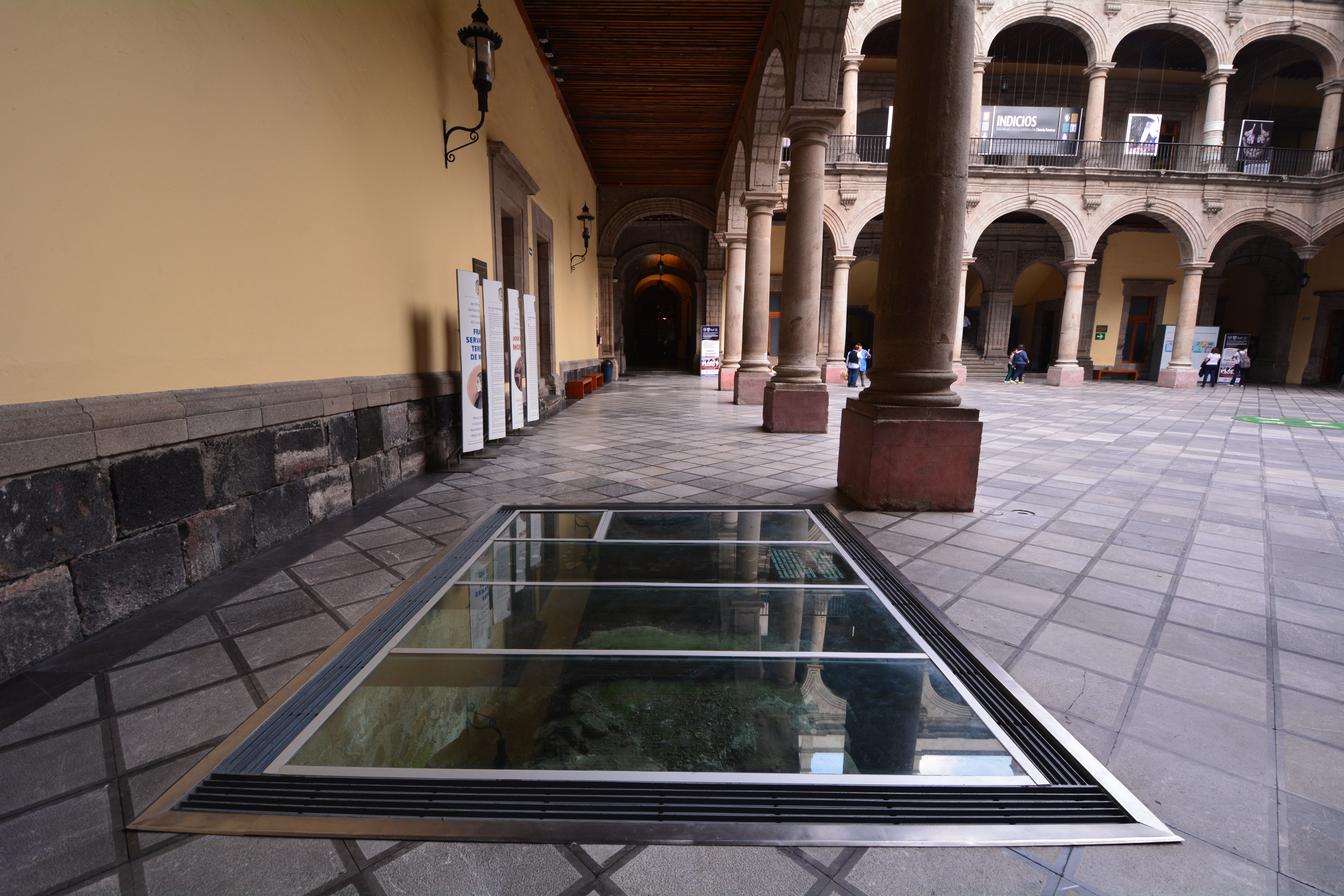
The INAH (National Institute of Anthropology and History) carried out excavations and created an archaeological window when vestiges of the viceregal period were found during the restoration work. The restoration was completed in 1980 and the Museum of Mexican Medicine was inaugurated. Even today, in its central courtyard, newly graduated doctors take their Hippocratic oath.
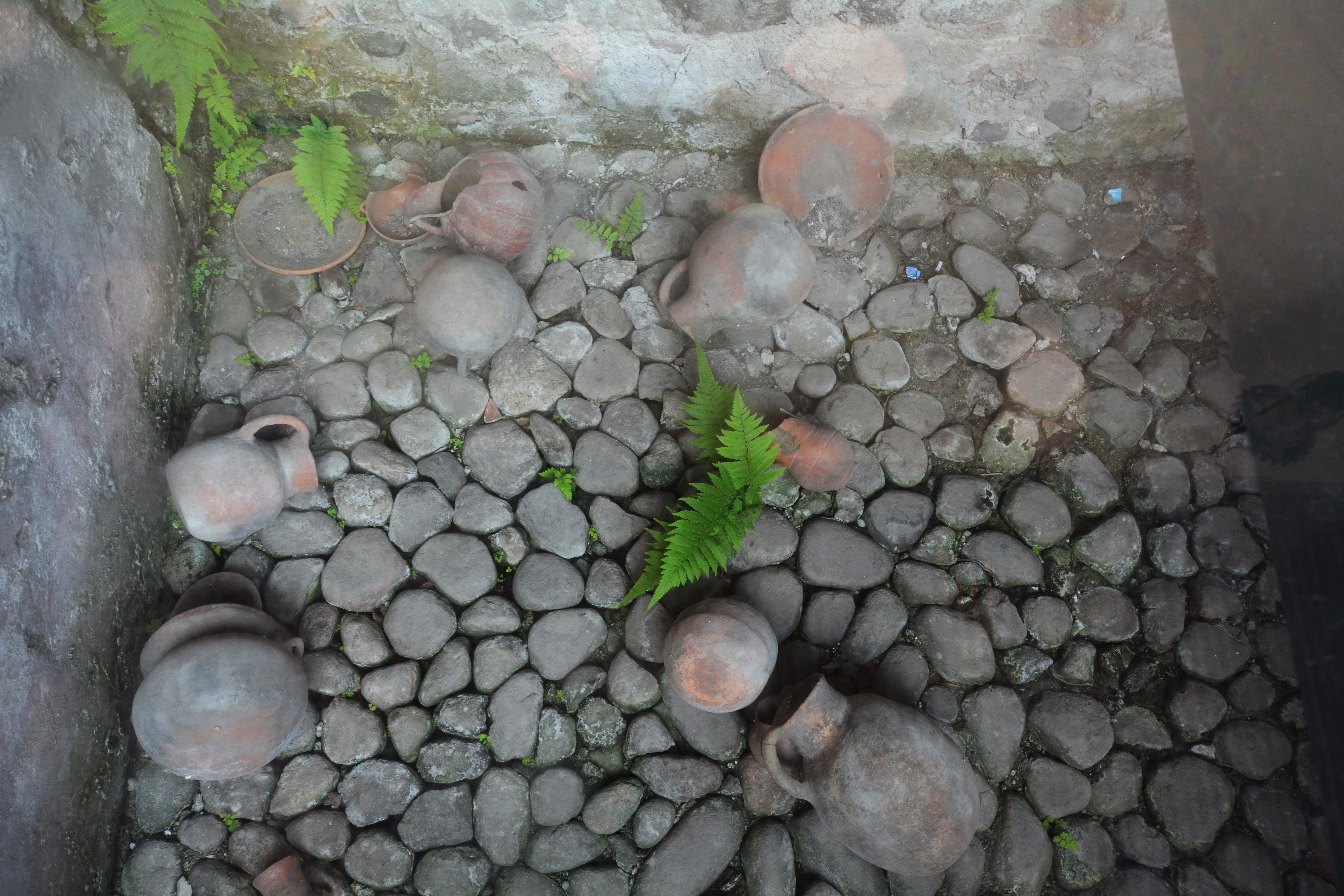
In the northwest corner of the main courtyard, a floor made of cobblestones from the colonial era was found, and on top of it, 13 scattered vessels, including plates, jugs, and pots, which had been left there as fill material.
On the west side of the window, there are remains of a wall made of tezontle stones and bricks joined with mud; its facades are covered with lime and sand with traces of red pigment.
There are two theories about the origin of these buildings. The first proposes that they correspond to the house that a Guerrero family donated to the Dominicans so that they could establish their residence in the capital of New Spain. The second suggests that the masonry wall is part of a small church that, according to historical documents, the religious built in this place where they lived for a short time.
Source: Raúl Barrera Rodríguez, director of the Urban Archaeology Program